
A reliable metal forming service helps manufacturers turn flat metal sheets, plates, and coils into accurate industrial components for assembly, equipment, infrastructure, and export production. At Formtech Metal, we support global buyers that need formed metal parts from Vietnam with clear engineering review, qualified production coordination, quality follow up, and shipment support. Therefore, customers can manage sourcing more efficiently while reducing production risk.
Our metal forming solutions cover CNC bending, stamping, pressing, rolling, curving, deep drawing, flanging, hemming, flattening, and secondary forming operations. Depending on the project, we can support brackets, housings, covers, frames, channels, guards, enclosures, cabinets, machine parts, structural components, and custom assemblies. As a result, buyers can source different formed metal parts through one coordinated Vietnam based system.
Vietnam has become an important sourcing destination for industrial buyers that want cost efficiency, supplier diversification, and scalable production. However, successful sourcing still requires strong control. A low quotation is not enough if the supplier cannot maintain tolerances, protect surface quality, or deliver consistent batches.
Formtech Metal helps bridge this gap by combining technical communication with local production coordination. We review drawings, clarify specifications, check materials, evaluate production routes, and follow up with factories during each key stage. In addition, we support buyers with inspection planning, packaging requirements, and export coordination.
A Vietnam based metal forming service is especially useful for companies that want to reduce dependence on a single sourcing country. It also supports buyers that need flexible manufacturing for both medium volume and long term production. As a result, customers can improve supply chain resilience while maintaining cost control.
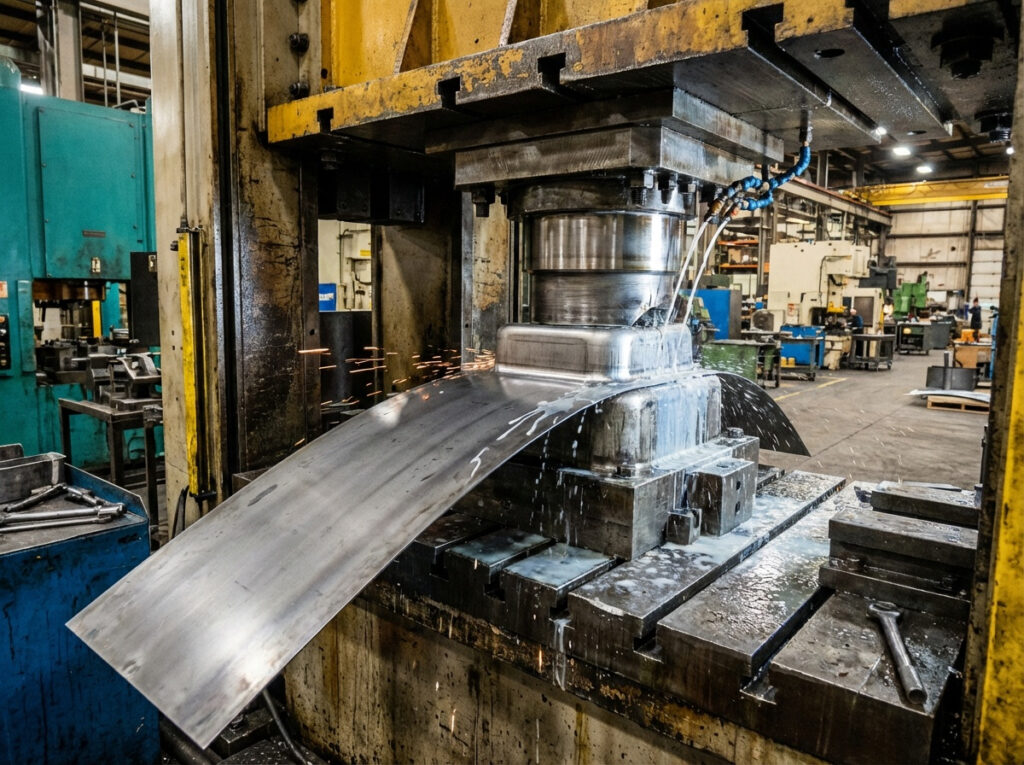
Formtech Metal supports multiple forming processes for industrial applications. Each process has its own strengths, limitations, and cost structure. Therefore, our team helps customers select the most suitable method based on geometry, material, tolerance, annual volume, tooling budget, and final application.
CNC bending is one of the most common processes in sheet metal production. It uses a press brake, punch, and die to create accurate bends in metal parts. This method is suitable for brackets, covers, frames, trays, cabinets, channels, electrical enclosures, and machine guards.
Because the process is programmable, CNC bending supports repeatable angles and stable dimensions across production batches. It is also flexible for low to medium volume orders because tooling cost is usually lower than stamping. In addition, multiple bends can be produced on one part when the bend sequence is planned correctly.
For projects that require accurate formed sheet metal parts, CNC bending can be used as an internal link to a dedicated capability page. This paragraph can connect readers to more detailed information about press brake capacity, bend radius, material thickness, tolerance control, and typical industrial applications.
Stamping is a high efficiency forming method for repeatable metal parts. It can include blanking, piercing, forming, embossing, coining, trimming, and progressive die operations. Once tooling is approved, stamping can produce large quantities with stable quality and low unit cost.
This process is suitable for clips, brackets, supports, panels, plates, covers, hardware, automotive parts, electrical components, and appliance parts. However, stamping requires careful tooling review. The project team must consider material behavior, springback, blank layout, burr direction, hole positions, and production volume.
For buyers that need high volume repeat parts, metal stamping can be used as an internal link to explain die design, tooling investment, production speed, and long term cost benefits. This helps customers understand when stamping is more suitable than CNC bending or laser cut fabrication.
Rolling and curving are used when parts require cylindrical, round, conical, or curved forms. This process can support ducts, rings, cylinders, guards, curved covers, tubes, cones, and architectural or industrial sections. It is often used in HVAC systems, machinery, storage equipment, transport parts, and construction components.
The correct rolling setup depends on thickness, material grade, radius, width, surface requirements, and tolerance. Therefore, process planning is important. If the radius is too tight or the material is too thick for the selected machine, the part may deform or fail to meet dimensional requirements.
Rolling also works well with secondary operations. For example, a rolled part may require welding, trimming, drilling, flanging, coating, or assembly. Because of this, Formtech Metal reviews the full part requirement instead of evaluating the rolling process alone.
Deep drawing is used to form metal sheets into deep, seamless shapes. It is suitable for cups, shells, containers, covers, housings, pans, enclosures, and custom drawn components. The process pulls sheet metal into a die cavity using controlled pressure.
This method can reduce the need for welding because the final shape can be created from one blank. As a result, deep drawn parts often offer better strength, cleaner appearance, and fewer leakage points. However, deep drawing requires strong control over material ductility, blank size, lubrication, die radius, drawing ratio, and press force.
For projects that require deeper metal shells or seamless housings, deep drawing can be used as an internal link to a dedicated technical page. This link can help customers learn about part depth, tooling design, material selection, and sample validation before mass production.
Many formed parts need secondary processes after the main forming step. These may include flattening, straightening, flanging, hemming, beading, edge forming, hole punching, slotting, deburring, welding, machining, and surface preparation. These steps help convert a formed blank into a production ready component.
Secondary forming improves final function. For instance, a hemmed edge can increase safety and stiffness. A flange can improve assembly strength. A flattened area can support better contact with another part. In addition, deburring and surface treatment can improve both appearance and handling quality.
Because secondary operations affect the final part, they should be reviewed during the quotation stage. This helps avoid hidden cost and production delays later.
Material selection has a direct impact on forming performance, cost, strength, corrosion resistance, and final application. Formtech Metal supports common industrial materials such as carbon steel, stainless steel, and aluminum. Depending on the project, we can also review coating, plating, painting, galvanizing, and powder coating requirements.
Stainless steel is preferred for food equipment, medical devices, electronics housings, laboratory furniture, and corrosion-sensitive environments. It provides excellent resistance to rust, moisture, and chemicals.
Many customers choose stainless steel when hygiene, long service life, and premium appearance are required. We support common grades such as 304 and 316 depending on project conditions.
Carbon steel is a common option for structural parts, machine frames, supports, brackets, cabinets, and industrial equipment. It offers strong mechanical performance and cost efficiency, making it ideal for many heavy-duty applications.
It can also be coated, painted, galvanized, or powder coated after forming to improve corrosion resistance and final appearance.
Aluminum is ideal for lightweight assemblies, transport products, electrical housings, architectural parts, and consumer products. It offers a strong strength-to-weight ratio while remaining corrosion resistant.
Because aluminum is easier to handle and lighter to ship, it is often selected for export programs that prioritize weight reduction and easier installation.
A successful metal forming project starts with a clear technical review. Formtech Metal checks drawings, 3D files, material specifications, tolerances, finish requirements, annual volume, packaging standards, and inspection expectations. This step helps define the most suitable production route.
During review, our team may suggest changes to bend radius, hole positions, corner relief, material thickness, tolerance levels, or assembly methods. These recommendations are not only about cost reduction. They also help improve manufacturability, repeatability, and production stability.
For broader sourcing pages, sheet metal forming can be used as an internal link to explain how flat sheet materials are cut, bent, stamped, rolled, and finished into industrial components. This link supports readers who want a wider overview before choosing a specific process.