
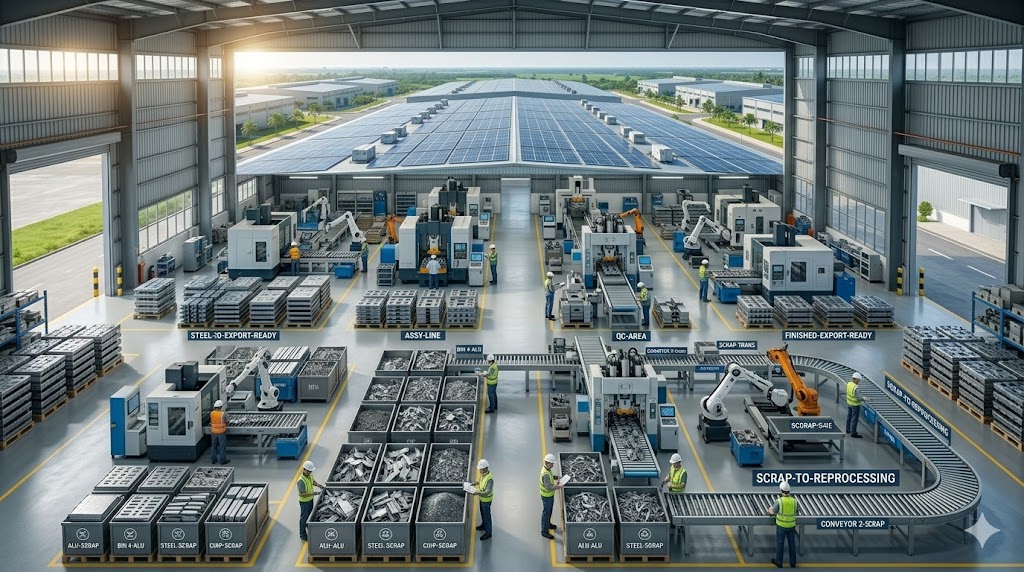
Metal Recycling Vietnam has become a critical pillar of sustainable industrial development as manufacturers respond to rising ESG expectations and stricter global supply chain standards. In modern production environments, recycling is no longer a secondary process. Instead, it forms a structured, data-driven system embedded directly into daily operations. Across stamping, machining, die casting, and fabrication facilities, Metal Recycling Vietnam programs now support resource efficiency, cost control, and compliance with international environmental frameworks.
As global buyers evaluate suppliers based on sustainability metrics, recycling capability directly influences procurement decisions. Therefore, understanding how Vietnamese plants implement scrap recovery systems is essential for B2B partners seeking long-term cooperation.
Why Metal Recycling Vietnam Matters in Industrial Production
Manufacturing processes generate unavoidable scrap. In metal forming, offcuts, trimming waste, defective castings, machining chips, and excess raw material represent a significant material flow. Without structured recycling, this scrap increases operational costs and environmental impact.
Metal Recycling Vietnam addresses this challenge through integrated collection, segregation, and reprocessing systems. Instead of discarding waste, plants sort scrap by alloy type, contamination level, and production source. This structured approach enables higher recovery rates and preserves material value.
Furthermore, recycled metals require significantly less energy compared to primary metal production. Aluminum recycling, for example, can save up to 95 percent of the energy required to produce new material from bauxite. Steel recycling also delivers substantial carbon emission reductions. Consequently, recycling directly supports decarbonization strategies within manufacturing plants.
Because global markets increasingly demand lower embedded carbon in components, scrap recovery has evolved into a competitive differentiator.
Operational Structure of Scrap Programs in Vietnam Plants
Effective Metal Recycling Vietnam programs rely on disciplined process control. Modern plants typically follow a multi-step workflow.
First, scrap generation points are identified across production lines. Each workstation uses designated containers labeled by alloy or metal type. This prevents cross-contamination and ensures traceability.
Second, digital tracking systems record scrap weight, source, and production batch. Many facilities integrate recycling data into enterprise resource planning platforms. This allows managers to monitor scrap ratios and continuously improve yield performance.
Third, collected scrap moves either to internal remelting units or to certified recycling partners. In aluminum die casting plants, internal remelting is common. Machining operations, by contrast, often send segregated chips to specialized processors.
This structured approach strengthens material accountability while reducing raw material procurement needs.
Zero Waste Forming in Advanced Metal Plants
Recycling alone is not sufficient. Manufacturers increasingly pursue process optimization to minimize scrap generation from the beginning. Zero waste forming represents this next stage of operational maturity.
Through advanced tooling design, simulation software, and precision process control, factories reduce trimming waste and reject rates. For example, progressive die optimization in stamping operations decreases offcut volumes. Similarly, CNC programming refinement minimizes excess machining removal.
Zero waste forming also integrates predictive maintenance and real-time monitoring. By detecting deviations early, plants prevent defective batches that would otherwise become scrap. As a result, recycling becomes part of a broader efficiency strategy rather than a corrective measure.
Within Metal Recycling Vietnam programs, zero waste forming reduces material loss while improving production stability. This alignment supports both cost efficiency and sustainability objectives.
Closed-Loop Supply Integration
Sustainability does not end at the factory gate. Increasingly, manufacturers integrate recycling into a closed-loop supply framework.
Closed-loop supply models allow scrap generated in production to return to upstream material suppliers for controlled reprocessing. In aluminum ecosystems, this approach is particularly effective. Scrap collected from automotive or industrial component production can be remelted and returned as certified billets.
Metal Recycling Vietnam supports closed-loop supply chains by ensuring scrap traceability and alloy consistency. When material origin and composition are documented accurately, suppliers can reintroduce recycled content into new products without compromising quality standards.
This circular flow reduces reliance on virgin resources and stabilizes material pricing volatility. Moreover, it strengthens long-term partnerships between manufacturers and raw material providers.
ESG Alignment and Compliance
Environmental, Social, and Governance frameworks now influence global sourcing strategies. European and North American buyers require documentation on waste management, recycling ratios, and material traceability.
Metal Recycling Vietnam programs provide measurable data to support ESG reporting. Plants track key indicators such as scrap recovery rates, recycling efficiency, and waste diversion from landfill. These metrics feed directly into sustainability disclosures.
Additionally, many Vietnamese factories maintain ISO 14001 environmental management certification. Structured recycling programs form a core component of these systems. By maintaining documented procedures and continuous improvement cycles, manufacturers demonstrate compliance readiness.
This transparency reduces risk for international buyers and enhances supplier credibility during audits.
Economic Benefits of Metal Recycling Vietnam
Beyond environmental performance, recycling improves financial resilience. Raw material costs often represent a significant portion of manufacturing expenses. When scrap recovery rates increase, effective material yield improves as well.
For example, aluminum scrap remelted internally can offset new ingot purchases. Steel scrap sold to recycling partners generates additional revenue streams. Over time, structured recycling reduces total cost per unit.
Furthermore, plants with efficient Metal Recycling Vietnam systems often experience improved production discipline. Scrap monitoring highlights process inefficiencies, prompting corrective actions that enhance overall quality.
Because sustainability and profitability align in this model, recycling initiatives gain stronger management support.
Technology and Digitalization in Recycling Systems
Modern recycling programs leverage automation and data analytics. Sensors installed near cutting and forming stations measure scrap output in real time. Automated conveyors transport metal chips directly to centralized collection units.
Meanwhile, digital dashboards visualize scrap ratios across departments. Production managers use this data to benchmark performance and identify trends. When scrap levels exceed thresholds, corrective measures can be implemented immediately.
Metal Recycling Vietnam increasingly integrates these technologies to ensure accuracy and accountability. As digital transformation accelerates across the manufacturing sector, recycling performance becomes part of smart factory ecosystems.
Future Outlook for Metal Recycling Vietnam
Global demand for sustainable manufacturing will continue rising. Carbon border adjustment mechanisms, stricter environmental regulations, and investor scrutiny all reinforce the need for responsible waste management.
Vietnam’s manufacturing base is well positioned to expand recycling capacity. Industrial parks are upgrading infrastructure to accommodate segregated waste handling and certified recycling partnerships. Additionally, foreign direct investment increasingly targets environmentally compliant production.
Metal Recycling Vietnam will therefore evolve from operational best practice to standard industry expectation. Plants that invest early in advanced scrap systems will strengthen long-term competitiveness.
Integration Within ESG Metal Forming Strategy
Recycling initiatives form an essential element of broader sustainable manufacturing strategies.
For a comprehensive overview, refer to Sustainable Manufacturing: ESG Metal Forming 2026. This pillar outlines how environmental governance, renewable energy integration, and responsible sourcing reshape Vietnam’s industrial trajectory toward 2026.
Within that strategic framework, Metal Recycling Vietnam functions as a measurable performance driver supporting carbon reduction and material efficiency.
Zero Waste Forming in Sustainable Manufacturing
Reducing scrap at the source enhances both productivity and environmental performance.
Learn more about Zero waste forming strategies that complement structured recycling programs. By optimizing tooling, improving yield rates, and implementing predictive monitoring, manufacturers reduce waste generation while maintaining quality consistency.
This approach strengthens cost efficiency and aligns with international sustainability expectations.
Closed-Loop Supply Chains and Circular Production
Circular material flows are becoming essential in global manufacturing networks.
Explore Closed-loop supply models that integrate scrap recovery with upstream material reprocessing. Through traceable recycling systems, Vietnamese plants can reintroduce recovered metals into certified production cycles.
Such integration enhances supply stability while reducing environmental impact.
Conclusion
Metal Recycling Vietnam represents a strategic evolution in industrial production rather than a simple waste management practice. Through structured scrap programs, zero waste forming optimization, and closed-loop supply integration, Vietnamese plants deliver measurable environmental and economic value.
As ESG expectations intensify, recycling capability becomes a decisive factor in supplier evaluation. Manufacturers that implement disciplined, data-driven recycling systems improve operational efficiency, strengthen compliance, and enhance global competitiveness.
For B2B buyers seeking reliable and responsible manufacturing partners, facilities operating advanced Metal Recycling Vietnam programs provide both sustainability assurance and long-term supply chain stability.